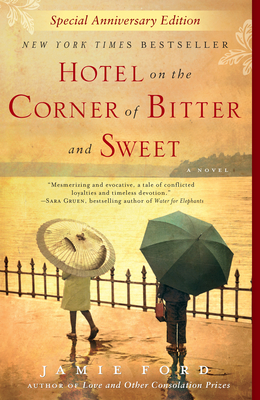
Very intriguing read. Taking place in 1909-1910 in the rural Montana city of Marias Coulee from the perspective of a 13 year old boy, Paul. It tells of his life with his 2 younger brothers, the one room school house in which they learned and what happens when their father, a widower of about a year answers a newspaper solicitation for a housekeeper that reads "Can't cook but doesn't bite."
There were many facets and it was fairly intricate, but one part that stands out as an educator was a moment when one of the main characters, Morrie, who is a last minute fill in teacher (for which was vacated due to an elopement of the previously employed teacher), has a run in with one of the 8th graders' dad. The dad insists on pulling his son out, he's old enough now to not be required to go to school anymore. The helplessness you feel as a teacher when a parent is not on board with what is best for the students is enough to make you want to give up.
Also along the lines of education, 1910 is when The Standards were introduced. The beginning of standardized testing. The things the students were expected to know and be able to reiterate I believe seemed superior. A 7th grader required to write an essay on a luck of the draw topic; agronomy for example. Penmanship. Ha! No need for that now in the world we live in. But the fact that these tests weren't scheduled and barely announced "We will be sending an inspector at some future date" and with it the tests, therefore making it impossible to teach to the test. You just had to make sure the kids were learning. I can't imaging teaching grades 1-8 simultaneously. Although, in some cases, it's not very different from now. Teachers are expected to teach to the level of student learning no matter where that level is. There very well could be an 8th grader who reads at a 1st grade level and you have to teach him along with the kid next to him who reads at a 12th grade level. The one room schoolhouse definitely was taught by a different type of 'teacher', an artist I like to think.
The book is also riddled with secrets to be told and secrets to be kept. Some as blackmail. Some for the betterment of the quality of life. And others just for the element of joyous surprise.
There is also romance. Not the way most books handle it, but it's there. So there's a little something for everyone :-) I definitely enjoyed reading this slower paced but makes you think book.
Thursday, March 22, 2012
Thursday, March 15, 2012
Welcome to your Child's Brain
So here's some non-fiction that caught my eye on the "new books" shelf in my library. There is enough humor and anecdotal narrative that makes this immensely more pleasurable to read than a text book. I have always been fascinated by the brain and how it works. I didn't pick this up to learn how to be a better parent, although it does explain a few things about why certain things "work" rather than others, which is helpful as a parent. It was my fascination with brains that drew me in. I feel like I know myself a little better too.
While non-fiction and full of large words and names of brain anatomy, this did NOT read like boring textbook. While not exactly a "page turner" (it took me a couple months to digest-well, I didn't have a lot of time to devote to it either), it wasn't dry either. There are enough vignettes and anecdotes to make it even more accessible to the lay man. I highly recommend this! And I will be looking forward to reading their other book, simply "Welcome to Your Brain" in the future.
Saturday, February 11, 2012
The Hiding Place
The Hiding Place put my in my place. I have had personal struggles. That seems to be my lot in life post-partum for about a year or so. They are very real struggles and trials, and I'm not trying to belittle what I'm going through, because there is no real comparison between people. Life is more of an individual sport, everyone trying to reach their own personal record, personal best in everything. However, reading about this very real hell turned to heaven blew my mind. Corrie ten Boom lived in Holland during WWII and she, her father and sister were very good Christians. The epitome of the word. Her father was so full of wisdom. She found herself the leader of an underground operation to help Jews hide from the Nazi's. Because of this, she, her sister and her father were imprisoned. Her father did not live long after that (he was very elderly, she was in her 50s herself). She and her sister Betsy were in one of the harshest concentration camps. Betsy, the older sister, had a most wonderful Christian spirit. She looked at everything from the point of Jesus. She took the word of the Bible into her heart and soul and let all good from it permeate everything she did and everything she was. Her spirit spread and changed everyone around her. Corrie had a harder time. She thought about the person who betrayed her to the Nazi's. Once she finally had a name for this person, anger festered. She asked her sister "Don't you FEEL anything for this man?" and to her, she meant anger, resentment or some other negative feeling. Betsy replied "Oh yes, I pray for him all the time!" When Corrie would express sorrow for those being persecuted, Betsy would express sorrow for the persecutor, the one who had no love. She wanted to show them that love was so much stronger than hate. It was love that she gleaned from the Bible and shared with everyone else to help them endure the harsh reality of life in a concentration camp. When they were first assigned their barracks, they found it was crawling with fleas. Betsy insisted that they give thanks to the Lord for ALL things, since the Bible didn't say to give thanks only for the GOOD things. They had miraculously been able to smuggle in a compact copy of the bible and they were sharing it, having sermon meetings, which could have been harshly punished, but their barracks, for some reason, didn't seem to have much supervision. One day, Betsy and the others who were assigned to work in the barracks knitting socks and a disagreement about what size they were to be making one day and asked the supervisor to come in and settle the matter. All of the overseers refused to enter their barracks-because of the fleas. The fleas that she insisted they thank the Lord for. The fleas that allowed them to have and share their one source of joy and strength by driving away those who would punish them for it. Wow. I also learned that God will give us the strength for any given situation, but that we need to have faith that He will give it to us when we need it. And that some things are too hard for us to bear and we need to be satisfied that there are answers, and we may not be ready for them or able to bear them. We need to be content to know that God knows. "Be still and know that I am God" I also learned about forgiveness. When all was over, Corrie wanted to let Betsy's dream come true to help those hurt to recover and heal emotionally. Not just those who were wronged, but those involved with inflicting it. Once while speaking, one of the actual guards from her concentration camp came up to her, thanking her for her message of hope. That sins can be forgiven. He extended his hand. She felt that she could not lift her hand to his. She had preached forgiveness, but could she forgive? She offered a few silent, pleading prayers, but it was not until she actually lifted her hand to his that forgiveness flooded through her.
I have a hard time forgiving, and I have never had things done to me as were done to her. I have a hard time letting go of control, even to God, whom I believe in. But in reading this, I have come to realize a little better of how to go about doing so.
If you've ever wondered how people could go through something as horrible as a concentration camp and come out still believing in God, this book has the answer. I could not provide an answer, but Corrie does. And she does it beautifully.
Tuesday, November 29, 2011
The Hunger Games Trilogy, Suzanne Collins
I would have to rate these books as some of my top all time favorites. Not that the story is as pleasant one, but that it is the story of an oppressive government and the life of the people under it. Their reality. It gives a message of warning for us. Do NOT under ANY circumstance give away our freedom. Do NOT let the government lead us carefully down the path of oppressiveness under the guise of philanthropy. Because once freedom is lost, not only is it incredibly hard to take back-for it has to be taken-a human, once in control, does not like to give it back-but taking that freedom back only comes at an incredibly high cost. A high unpleasant cost. You will laugh, you will cry, you will live in suspense, you will be sickened by what corrupt authority can do without seeming to have remorse. These are extremely well written, around 300+ pages each. I read each book in a weeks' time. You can blast through them in a day if you have no other obligations; but I read a review in which the author related reading a book very quickly to being in a hot dog eating contest and posing the question something to the effect of "Do I really want to be the literary equivalent of a food eating contest?" So I deliberately took as much time as I could muster (a week) on Mockingjay to digest it.
The characters are loveable, relate-able and I became emotionally involved from page one. The personal, political, and other subplots give a LOT to think about. I am not one to re-read books; I have a hard time because my brain says "I've read this before" and starts skimming instead of reading, so I usually don't re-read anything for a very long time. However, I read these last fall right after the last one came out (there is a DEFINITE plus not learning about a series or trilogy/collection until the last one is about to be published! No waiting!), and by Christmas time I was ready to read them again. I haven't had that chance yet, but my head is STILL reeling with all the things there are to think about. I STILL get teary-eyed about some parts when I think about it. Many people did not like the ending to Mockingjay, but I did. Whether or not I personally liked every detail is debatable even to me, but I understood why things ended the way they did. And to me, that created a sense of finality that would let me sleep again at night. My husband listened to the audio version from the library and he didn't like the ending as well as I did until I explained how I saw things. So I guess I just view things in a very different light. "Happily Ever After" isn't the only ending, and it doesn't necessarily always paint the same picture. Compared to Orwell's 1984, I was SO depressed at the ending of that book!! I was NOT depressed like that at the end of Mockingjay.
Alice's Adventures in Wonderland and Through the Looking Glass, Lewis Carroll
An oldie that the Book Club is reading for their meeting in January (skipping December). I read Alice's Adventures in Wonderland before. I can't remember how old I was, maybe middle school? Upper elementary? But I don't think I read Through the Looking Glass, though. I remember thinking that it was such a strange piece of literature, so I was wondering how, as an adult, I'd view it. So far I still think it's a strange piece of literature, and it's definitely not the most "suck you in" narrative. The copy I checked out of the library, and this is funny, is a discarded copy from a DIFFERENT library and has old tiny cursive notes scrawled into the margins. Almost like notes, as if this book had been read for a psychology assignment. In some ways I'm interested to figure out what the notes mean, and in other ways it drives me insane trying to make out the words that sometimes only repeat what was already printed on the page.
But,with it being so strange, almost absurd and silly, brings the question, does literature NEED to have a point?
Saturday, October 22, 2011
Hotel on the Corner of Bitter and Sweet, Jamie Ford
My good friend Amy invited me to join her book club up in Boise, and while at the moment my baby's preferences for nursing (instead of being fed any other way) and her bedtime prevent me from being able to go, I have started reading the books that they are reading, which is really cool for me. If I can't be there to discuss with others, I can at least discuss with Amy and I feel a part of something, even if I'm not......if that makes any sense! Anyhow, I just got it from the library today and I will update more on it later!
Update: I have now finished the book and really enjoyed it. The chapters are brief, so if your life gets interrupted frequently (aka you're a mom) it really helps! It's written in split narrative, Henry (the main character) as a child/teen and his relationship with his family, particularly his father, and his decisions based on his experiences at the time, and Henry as a grown man who has a grown son of his own and their relationship. That sub-plot, the one of father-son relationships was really interesting to me and evoked a lot of thoughts. As a child, do I REALLY know my parents? Or do I just think I really know who they are and who they were? As a parent, how can I let my children know who I was? Who I am? As a person separate from being the authoritative figure in their life? I kept a journal through my middle/high school years, and even though I probably wrote every day creating an absurd amount of redundancy, at least they will be able to read it and have insight to what and who I was at the time. (I intend to let my daughters read parts of my journals that relates to their same age as when I wrote it).
Historically, even though I lived near Seattle (where the story takes place) until I was 6 and in SW Washington state after that, I was surprised by how little I really knew about the Japanese evacuations during the second world war. I now am more enlightened with the situation-which was represented in a very good way; from the perspective of a child-which the author did very well and in such a matter of fact, this is what happened way, that he does not condemn neither condone the acts of the US Government of that day, although with the mind of Henry, you DO get the big sense of injustice and the confusion of how it would make sense. BUT we also have to realize that only hindsight is 20/20 and for us to judge what happened in history is sometimes more complicated than it seems. We who did not live through that era may not fully realize the implications and feelings of the populace at the time. What we see as a simple, much BETTER solution may have been completely out of the grasp of reality then. Does that mean I agree with the Japanese internments? Definitely not. It just means that I realize that I don't believe I have all sides to the story including the context of the time in order to truly form what I believe to be an education opinion. It did, however, help me to realize how complicated things must be when we have fears of terrorists today. We can't just round up everyone of a certain race, religion, creed, etc and contain them because we are afraid of a few-who probably would evade such efforts anyhow. And the government would be gun-shy to do anything similar to that because of what happened. But does that impeded their ability to do what they feel is necessary for fear of public outcry? Who knows. It's just a lot to think about. And THAT is what makes this book good. I'm STILL thinking about it and I put it down several days ago.
Update: I have now finished the book and really enjoyed it. The chapters are brief, so if your life gets interrupted frequently (aka you're a mom) it really helps! It's written in split narrative, Henry (the main character) as a child/teen and his relationship with his family, particularly his father, and his decisions based on his experiences at the time, and Henry as a grown man who has a grown son of his own and their relationship. That sub-plot, the one of father-son relationships was really interesting to me and evoked a lot of thoughts. As a child, do I REALLY know my parents? Or do I just think I really know who they are and who they were? As a parent, how can I let my children know who I was? Who I am? As a person separate from being the authoritative figure in their life? I kept a journal through my middle/high school years, and even though I probably wrote every day creating an absurd amount of redundancy, at least they will be able to read it and have insight to what and who I was at the time. (I intend to let my daughters read parts of my journals that relates to their same age as when I wrote it).
Historically, even though I lived near Seattle (where the story takes place) until I was 6 and in SW Washington state after that, I was surprised by how little I really knew about the Japanese evacuations during the second world war. I now am more enlightened with the situation-which was represented in a very good way; from the perspective of a child-which the author did very well and in such a matter of fact, this is what happened way, that he does not condemn neither condone the acts of the US Government of that day, although with the mind of Henry, you DO get the big sense of injustice and the confusion of how it would make sense. BUT we also have to realize that only hindsight is 20/20 and for us to judge what happened in history is sometimes more complicated than it seems. We who did not live through that era may not fully realize the implications and feelings of the populace at the time. What we see as a simple, much BETTER solution may have been completely out of the grasp of reality then. Does that mean I agree with the Japanese internments? Definitely not. It just means that I realize that I don't believe I have all sides to the story including the context of the time in order to truly form what I believe to be an education opinion. It did, however, help me to realize how complicated things must be when we have fears of terrorists today. We can't just round up everyone of a certain race, religion, creed, etc and contain them because we are afraid of a few-who probably would evade such efforts anyhow. And the government would be gun-shy to do anything similar to that because of what happened. But does that impeded their ability to do what they feel is necessary for fear of public outcry? Who knows. It's just a lot to think about. And THAT is what makes this book good. I'm STILL thinking about it and I put it down several days ago.
Friday, October 21, 2011
The Undaunted, Gerald N. Lund
This is a Historical Fiction (I absolutely LOVE this genre because it helps history to come alive and become more memorable to me). It is an account of the Hole in the Rock Pioneers of the late 1800s. (For more information about The Church of Jesus Christ of Latter-Day Saints, sometimes referred to as Mormons, please visit The Official Church Website or Mormon.org)
Being a member of the LDS church, I was really surprised that I had never heard of this Hole in the Rock expedition. But that's also what made it that much more enjoyable for me, everything was new and I didn't anticipate events, such as when I read The Work and the Glory series or Fire of the Covenant (both by Gerald N. Lund and all historical fiction).
As usual, in addition to the historical facts being presented in a poignant way and explanatory notes at the conclusion of each chapter, there is also some innocent romance along the way. It's long, but it's good!!
Being a member of the LDS church, I was really surprised that I had never heard of this Hole in the Rock expedition. But that's also what made it that much more enjoyable for me, everything was new and I didn't anticipate events, such as when I read The Work and the Glory series or Fire of the Covenant (both by Gerald N. Lund and all historical fiction).
As usual, in addition to the historical facts being presented in a poignant way and explanatory notes at the conclusion of each chapter, there is also some innocent romance along the way. It's long, but it's good!!
Subscribe to:
Posts (Atom)