Wednesday, July 30, 2014

Lord of the Flies, William Golding

I know this book has many different cover arts. This reflects the one I read. Also, I will not be reviewing the movie adaptation since it is rated R and aside from that, I'm not sure I need a visual more than what my imagination has already come up with. Although looking at pictures from the movie, the actor playing Ralph was a doppleganger of my imagination for sure!

Well, this is definitely a confusing bit of literature. But it was written in the 1950’s where, as I’ve have internet “conversations”, the point of literature and what the audience of the time wanted and demanded could have been very different from today. For me, I felt like there were WAAAAY too many unanswered questions, details just completely left out, like the character of “Piggy” we never find out his real name.

It starts out as what seems to be an island adventure story of a bunch of boys, “littluns” who are around the age lf 6, and “bigguns” who are closer to 12 ish. Our main protagonist, Ralph gets elected Chief because he found a Conch shell and Piggy shows him how to blow it and by so doing, he brings all of the boys out of the woodworks and seems to be in charge. His nemesis is Jack, the leader of the choir boys-turned hunters. With no adults, they are left to their own devices. Ralph wants rules and order and for everyone to make sure that they keep a fire going because the appearance of smoke may help them get rescued. Jack and the Hunters just want to hunt the native pigs for meat and have feasts. As mentioned in a “notes” section at the end of the copy I read, Ralph represents modern society with laws and order. Jack represents a lack of those things and the carnal, sensual nature of man that always balks against rules and order. Piggy, is as the name implies, overweight, he has asthma and wears glasses. The glasses are important because they are the only means of starting fire, using them and the sun to get a spark. He has intelligence and he thinks things through, but no one takes him seriously, so he unofficially makes himself Ralph’s right hand man. Ralph eventually realizes the value that Piggy has, but is then subsequently ridiculed for it. Jack and the hunters use paint to disguise themselves, first for camouflage to hunt better, but then it becomes a status symbol and also a way to transform who they are.

With the symbolism in mind, we can see how a lot of people get made fun of for having common sense. We see how those who listen to those with common sense are also ostracized. We see leaders who do things with emotion and fervor, serving what the people want to hear and see. With the paint, the hunters truly become savages and they become so incensed with it that death occurs to the innocent. And in the heat of the moment, many of the boys have a role in this murderous endeavor. It kind of reminded me of the KKK and how they disguise themselves and how, without that cover, could seem like decent people, but once they have on their disguise, are given courage to do horrible, terrible things to other human beings.

I wasn’t incredibly impressed by this book, to be honest. It was depressing and reminiscent of how I remember feeling at the end of reading “The Pearl” by John Steinbeck for one of my freshman year of high school required readings. But the point of these types of book isn’t really entertainment. These are warning books. These are meant to teach us lessons about ourselves as a human race. How we need to tame human nature and kick against the pricks that would have us become carnal, sensual, savage and without feeling towards one another. We need to be a human race that respects and reveres a certain level of order based on reason, common sense, human decency, and a love of mankind. We need to move past childish ways of making fun or not taking people seriously if they are “socially awkward” or anything that Piggy represents. We need to value EVERYONE for what they can bring. Hatred, jealousy, lust for power are all things that drove Jack to become what he did. A lesser character, Roger, became his wing-man as the only true sociopathic character who we find was the main person who would torture others. Truly sadistic. He took power, whereas Ralph had insisted on a vote for leadership.

We see the fall of the boys’ society when Ralph’s plan yielded no immediate results. Yet, the minute Jack offered something better-a taste of meat instead of the dull diet of fruit and water, alliances changed. And once his true colors showed, the other boys were too afraid of what would happen to them if they attempted to leave. It’s like the bible story of Jacob and Esau where Esau gave up everything in order to curb his hunger for a moment. We need to be weary of politicians and leaders who promise the offer of a quick solution. Maybe we should look for more honest people who tell us straight up that their solutions, while they may not LOOK like the right thing at first, or might hurt us a little more than we are already hurt, are actually better in the long run. After all, even during the most heinous crime of this book, when all was said and done, it was only finished when, as Ralph had always said, smoke was seen.

Some people have tried to draw similarities between Lord of the Flies and Hunger Games, but I only see VERY loose similarities and that is children inflicting violence on others….possibly as a form of entertainment. You get the impression that was what it was for in this book, but it’s never completely and solidly stated. I mean, in the 50s, how were they to be watched? So the premise of the two books  and WHY the kids are being violent are completely different and I believe that the intentions of the books are different and the lessons to be learned are different. Lord of the Flies felt hopeless, Hunger Games taught that the only things stronger than fear is hope.

But nonetheless, I did find this article interesting with some up to date comparisons and studies about human psychology: http://www.shmoop.com/lord-of-the-flies/

Although I must warn that it pretty much sums up the entire plot synopsis on the second page, so if you want to read it without any idea, skip page two. The rest goes into more depth with thematic material.

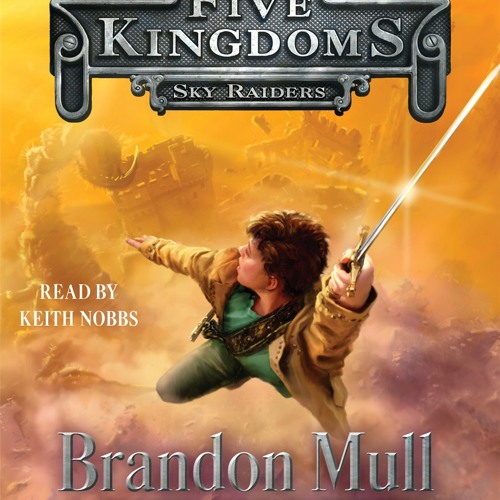
Sky Raiders, Brandon Mull


Wow. Ok. So this was my August book club book. It is book one in what will be a 6 book series. This is the first series book that I will start reading right after the first is published and have to wait for the rest to come out.

I’m having a hard time getting over the premise of Cole, our protagonist, and his friends getting to this alternate world via kidnapping. Apparently there is a LOT of magic of some sort going on, since no one will notice they’re gone. They pretty much fade from existence on Earth. So at least parents aren’t left completely broken and terrified for their missing kids. I guess that’s merciful. But I had a hard time because of what is going on in the world today with kids being kidnapped to be sold into the Sex Slave industry, which is alive and well in many developed parts of our country and child prostituting is much more common that anyone would want to admit. It’s sickening and for some reason I just could not shake that image while reading this book. I keep waiting for Cole to wake up, maybe he’s in a really imaginative coma on Earth and this is all happening in his head. I would sure LOVE for that to happen at the end of the series. Or at least a happy ending when all kids kidnapped from Earth get returned and no time has passed on Earth or something like that.

Anyhow, if you get past the kidnapping part, this is a REALLY suspenseful, action packed adventure full of intrigue, hideouts, magical abilities, magical weaponry, deceit, betrayal, friendship, loyalty, risks, quick thinking, and so much more!

Absolutely imaginative. Just when you think you may understand something about this world, you realize you don’t even begin to know the half of it.


I am definitely interested to see where this series goes. I am secretly hoping that all the kids get to go back to Earth and be with their families and finish living their normal lives.

A Tale of Two Castles, Gail Carson Levine


I did a bunch of fluff reading while visiting my family. While the kids played with grandparents, I read. I chose easy, entertaining books for the purpose of collecting reading points for the adult summer reading program. Hey, the big drawing prize is an iPad, and if I can get an extra chance, why not?

My 9 year-old daughter got a few new books and when I ran out of things that sparked my interest, I moved to it. This one was really nice. Elodie is a young girl of 12 who is taking a boat to Two Castles where her family has instructed her to apprentice herself to a weaver-a good and noble trade-for 10 years (because it’s free), when her heart is in mansioning (acting). During the trip, she learns that the law has done away with all 10 year free apprenticeships and she has no money to pay for even a 7 year apprenticeship anywhere. She has also been warned that in Two Castles, there is a king (Greedy Grenny) ruling one castle and an Ogre who rules in the other. There are also rumored to be dragons in the city as well.

First day there, she sees the Ogre and a Dragon and manages to get her only large coin stolen by one of the many cats who are there for protection from the Ogre. Ogres are shape shifters and if there are enough cats, they can force an ogre to shape shift into a mouse and then devour it.

Through many adventures, Elodie explans her talent of acting, learns how to think-to induce and deduce and use common sense-and how to overcome prejudices. Many people feel a certain way toward certain beings and refuse to change. But Elodie is not inhibited by previously held suspicions, and it appears that those inhibitions are limited to those who have been brought up in Two Castles. Others elsewhere are much more open-minded to allow time for explanations and rational thought before making a judgment call.


Plenty of twists and turns, suspects who are guilty-or not! Plenty of suspense could  be found as well. I really enjoyed this book for middle readers.

Wednesday, June 11, 2014

The Book Thief, Markus Zusak


Oh wow. Where to begin? I give 5 stars to this book. It was beautiful and tragic. How can it be both? So many things in life-and death-are both.

This book is Historical Fiction (I love this genre!) set in WWII Germany. The narrator is Death. His tone is (as you find out through some Q&A with the author) perfect. At first, Death as narrator didn't work, but then Zusak came back to him and changed some things and made it perfect. Death must come to collect souls, release them from their bodies and carry them to wherever he takes them (it is left to the imagination, insert your own belief system here, I suppose). He is tired. He is over worked. Especially during a war. Why do humans do this much killing of each other? But every once in awhile, he notices someone living. And the person of special interest to him is Liesel Meminger, a young girl of 9 at the opening of the book, who is acquainted with death. We don't know Liesel's father, but her mother has given her to foster care, we don't really know exactly why, but it is inferred that her mother wasn't part of the right political party at the time, and therefore viewed herself as a direct threat to the safety of her children. So the story unfolds as Liesel begins life with some foster parents on Himmel St. in Molching, Germany. Hans and Rosa. They have 2 grown children of their own. They are Christian (as is Liesel). Which isn't condemned but certainly not entirely safe to be either.

Theirs is the story of people in Germany who did NOT buy into what Hitler said. They didn't believe that Jews were a scourge. They show you the impoverished state of the people of Germany under Hitler's rule. His country was falling apart from the inside out as he touted the German Ideal. As a line in the movie "Captain America" states "People forget that first country the Nazi's invaded was their own." You had to "apply" to become a member of the Nazi party and sometimes they denied you because they thought you were too sympathetic to the Jews. Or they left your application pending indefinitely. And you really couldn't get much work if you weren't a member of the party. And then there was hiding Jews.......

In the Q&A section at the back with the author, this exchange was made:

Q: There are many novels set during the Holocaust, but The Book Thief offers a different perspective. What do you most want teenage readers to understand about Liesel's story and this dark period in our world's history?

A: I honestly just hope that they'll never forget the characters. This is the first time I've ever missed characters that I've written-especially Liesel and Rudy. I also hope that readers of any age will see another side of Nazi Germany, where certain people did hide their Jewish friends to save their lives (at the risk of their own). I wanted them to see people who were unwilling to fly the Nazi flag, and boys and girls who thought the Hitler Youth was boring and ridiculous. If nothing else, there's another side that lives beneath the propaganda reels that are still so effective decades later. Those were the pockets I was interested in.

And let me tell you how refreshing it was to read more of this side. I've read Corrie Ten Boom's story (and reviewed it on here) she and her family were also Christian's who hid their Jewish friends and ended up being sent to concentrations camps because of it. But this was another part of it entirely. This was the part of the citizenship that suffered at Hitler's hand not necessarily because of their offenses (although the minor infractions were punished severely), but because they weren't compliant enough. It gives me hope to know that not EVERYONE was duped by Hitler. Even some of the children and youth were able to see through the facade. 

At several points, there are stories within stories, and one such describes the power of words:

  There was once a strange, small man. He decided three important details about his life:
      1. He would part his hair on the opposite side to everyone else
      2. He would make himself a small, strange mustache
      3. He would one day rule the world

  The young man wandered around for quite some time, thinking, planning, and figuring out exactly how to make the world his. Then one day, out of nowhere, it struck him-the perfect plan. He'd seen a mother walking with her child. At one point, she admonished the small boy, until finally, he began to cry. Within a few minutes, she spoke very softly to him, after which he was soothed and even smiled.
   The young man rushed to the woman and embraced her. "Words!" He grinned. "What?" But there was no reply. He was already gone.
   Yes, the Fuhrer decided that he would rule the world with words. "I will never fire a gun," he devised. "I will not have to." Still, he was not rash. Let's allow him at least that much. He was not a stupid man at all. His first plan of attack was to plant the words in as many areas of his homeland as possible.
  He planted them day and night, and cultivated them.
  He watched them grow, until eventually, great forests of words had risen throughout Germany....It was a nation of farmed thoughts.
  While the words were growing, our young Fuhrer also planted seeds to create symbols, and these, too, were well on their way to full boom. Now the time had come. The Fuhrer was ready.
  He invited his people toward his own glorious heart, beckoning them with his finest, ugliest words, handpicked from his forests. And the people came.
  They were all placed on a conveyor belt and run through a rampant machine that gave them a lifetime in ten minutes. Words were fed to them. Time disappeared and they now knew everything they needed to know. They were hypnotized.

I hope I never live to see the day when something like this happens again. However, I worry that people get so desperate to hear the words they want to hear that they will believe them, no matter how irrational they may be. That we won't care if they are lies because they sound good. I guess from this we learn that "The pen is mightier than the sword" in some cases. Words can hurt more than sticks and stones-both psychologically and physically (in the case of Nazi Germany). We must use our words for good. Especially words of reason. Don't get sucked in to propaganda from any political spectrum. Never stop thinking for yourself or questioning or voicing your opinion-and being willing to change your opinion should rational information be presented to challenge it. If there ever comes a time when reasonable, rational words start to be ridiculed, beware.

Friday, June 6, 2014

The Five Love Languages of Children, Gary Chapman & Ross Campell, M.D.

A friend of mine told me about this book not long ago and I put it on hold at the library. I haven't read the original one, but remembered hearing a lot about it and doing a quiz to find mine (but I had forgotten).

I cheated and had my 9 year old take the quiz on their website: http://www.5lovelanguages.com/
But let's be honest, it's a lot easier for you to determine your own love language and then tell others about it than it is to decipher it out for your own. My 3 year old is too young to determine; that comes around age 5 or 6 or so. So I took the quiz and had my husband take it as well.

I feel like I learned a lot about myself and why I react the way I do (inwardly mostly) to certain things or the lack of certain things. I am overwhelmingly "Quality Time". This explains why I always just KNEW I didn't need a guy who would buy me things (incidentally, when faced with getting a gift or giving up one of the OTHER love languages, I always ignored the gift, so I scored 0 there. Don't get me wrong, I love to get gifts, but if doing so means I have to give up something else, I don't want it!), but that I always knew I needed a guy who would BE there. I couldn't be married to a businessman who was required to travel a lot. That just doesn't compute with my quality time need :-) It also explained to me why I feel so compelled to make sure that my kids have quality time with their grandparents, even it it might sometimes mean that we visit them instead of going somewhere else on vacation (someday our ability to do BOTH will emerge, but not for awhile); because by giving them time with their grandkids, I am expressing love in the deepest way I feel it. And it also explains to me why I sometimes feel hurt if people (friends and family alike) don't make time for me. While it's not an affront to me or their lack of care for me, because it's my primary love language, I tend to internalize it personally. Knowing this helps me to be aware that those hurt feelings are mine and mine alone and hat I can't be angry with others or assume they don't care. They just express their thoughtfulness in other ways and I can totally accept that! In short, it kind of explained to me why people don't always think the same way I do, lol.

My husband is Acts of Service and my 9 year old Words of Affirmation. Light bulb moments GALORE. It definitely isn't going to be a super easy adjustment, but knowing this and the other things mentioned in the book (discipline, how to teach kids how to manage anger in order to prevent passive/aggressive behavioral patterns), hopefully my family will be able to express love in more meaningful ways to each other.

Fabelhaven #3 Grip of the Shadow Plague, Brandon Mull


Book 3 in the Fabelhaven series.

A lot happens in character development:

Kendra learns more about the powers the fairies bestowed upon her and how to use it.

Seth learns that if he must take risks, they should be calculated and weighed heavily with the consequences of both taking and not taking the risk.

You learn more about other preserves and the Society of the Evening Star which is pure evil.

You learn the nature of newer magical creatures such as Centaurs, Dyrads, and Hamadryads.

The shadow plague permeates every species turning them into dark, evil versions of themselves. Only humans turn into shadows (invisible to everyone but Seth) and are able to fight the change from good to evil. There is a theory that Grandpa Sorenson and Warren disagree on-and that is the amount of personal accountability magical creatures have. Grandpa thinks that the creatures are what they are and you can't truly judge against them because they are doing what they naturally do. Sort of like how you can't blame a bear for being a bear and attacking a human-even if that human had had some sort of relationship with it before, because after all it IS still a bear and a bear is going to do what a bear is going to do. It's just his nature. Grandpa believes that creatures are either light or dark, and depending on their nature, it determines what they will or won't do. Warren doesn't fully agree, he believes that the creatures are intelligent enough to make a conscious choice. Interestingly enough, once everything is resolved, only creatures of light who ENJOYED being dark had any recollection of BEING dark. With that fact, and very little knowledge, I can definitely see both sides of their arguments. It also made me think of Percy Jackson and "Bob", a Titan who'd had his memory erased and Percy helped him to create a new "him" and when he began to remember, began to revert back, but then was convinced that he DID have a choice. Who he innately was did not have to determine who he would continue to be.

Kendra is now almost 15, so of course, we need a crush for her :-) Gavin fills this role. He's a bit older and has a stuttering problem (which I think is really interesting and good to have someone with an obvious thing to overcome also be a hero figure for the YA/kid audience). His talent? Dragons. We get into dragons in this book. One thing that all the books I've read that have anything to do with dragons agrees that they are highly intelligent beings-right on par with humans. Interesting that everyone would agree on this-and the fact that they also have a complex range of emotions as well.

We experience our first truly painful sacrifice through death. We've seen death before, a few times in this book, but the first death that got me choked up enough that I had a hard time continuing to read (since I haven't read them yet, I'm reading them aloud to my older daughter, she's now 9).

I have no idea how Brandon Mull is going to wrap things up in just 2 more novels, but I'm looking forward to it. It's kind of like Percy Jackson's world, in that the evil force is immortal and the ones who are concerned about keeping it at bay are mortal and the evil forces are also possessed of infinite patience. They seem to think that because they are immortal they will win in the end, eventually, so any time mortals have a victory, it's only a minor set back to the bad guys. I'm hoping that at the end of Fabelhaven there's some sense of finality, or at least a long duration of it....even though in real life, the fight against evil is never ending, it'd be nice to know in our fictional worlds that this fight is worth it and good will always prevail against evil.

Monday, May 26, 2014

The One, Kiera Cass


Ok, so very, VERY rarely do trilogies keep getting BETTER as they go. But As you may or may not recall, the first book, The Selection I gave a 3.5 star rating. The second book, The Elite I rated closer to a 4. THIS one? The One...I'm giving in 4.5.

Why? Because I believe the message this book was sending was not about a romance. It wasn't about which boy she was going to choose to love, it became an overwhelming message of "choosing to do the right thing no matter what the consequences of that choice may be." There are SO many times when doing the right thing SHOULD have gotten America kicked out of the palace whether or not the Prince wanted her there. Doing the right thing made her an enemy to the King basically. Finding ways around doing what she was supposed to and still following orders, but by doing the right thing, not by following verbatim.

Another message that I liked was that there are two sides to every story. And behind ever bully is a person who is probably very insecure about something and until you can see them for that vulnerability, and they by chance let you in can you begin to see them as a person rather than mean actions. One character in particular has been horrible the entire time, but when caught in a moment of insecurity releases everything about how she's felt and how she really doesn't LIKE being the mean girl, she just doesn't really know how to react or how else to manipulate circumstances to her advantage. She has such a change of heart from letting this out that she eventually apologizes to EVERYONE she's wronged.

And the final message I was much appreciative us is that America doesn't end up "choosing" one guy over another. She realizes what love really is-and that it's not just physical passion (although there is plenty of wanting going on), and it's not just getting along. It's about finding someone who makes you feel like your authentic self. It's also about letting go of someone you loved once and how it's OK that they will ALWAYS be a part of who you are. A part of your heart will ALWAYS belong to the people you gave it to in the past. I mean, I bet all of us can think back to the first time we thought we were "in love" and even if we don't feel that way about that specific person anymore, there's still a place in your heart for them. And that's ok. It's not betraying your current love. It's just a part of you. And it's about how no relationship is "happily ever after" as the last line of the book says "It's so much more." That you WILL fight. You WILL have disagreements. You WILL have misunderstandings. But you absolutely cannot make rash decisions in the heat of the moment when you are angry. You don't just jump to break up/divorce when you have a spat in the heat of the moment and move on to someone else because of it. You work it out. At the end of the day, the person you absolutely cannot live without, the one you'd take a bullet for, the one you want to be happy more than you want your own happiness is worth a few arguments, disagreements and misunderstandings. They are worth finding out THEIR side to the story. And I liked that message. Especially since you know how I feel about love triangles and how they give that false sense to be a beautiful leading lady, you need to have 2 men vying for you being completely unrealistic. I'm glad that it was spun in such a way that you can realize that people you grew to love romantically can be put in different positions and you CAN grow apart. I also enjoyed the happy ending for everyone. No one was left out or settled. Well, at least as far as main, main characters go.

The other happy ending (although it comes about in a sad way) is that the society is going to change and attitudes are going to shift. The caste system is going to come down, although they're not sure how. Since it's become such a huge part of people's identities, they know it's going to take a lot of time (in my opinion, it's going to take a generational shift over at least 1-2 generations to full eradicate former perceptions), but they're dedicated to do so. And with that, people will inherently gain more freedoms.

But all in all, the thing I was most satisfied with was that first message of doing what is right no matter what the outcome. America Singer puts doing what is right ahead of her own desires, ahead of what would make HER life easier or what would make HER life happier. I think that's a message the YA audience needs to hear. If America was willing to give up EVERYTHING in order to do what she felt in her heart was right, then we too can stand up for what we feel is right. And you don't have to be mean or circumventive or shady in how you do it either. Even when you feel like you are backed into a corner, there is a way out that will keep your integrity intact.

So all in all, along with the fairly non-controversial ending that is 98% happy, I am very satisfied with this trilogy. Fast reading, entertaining and proves great points in this final installation. I also enjoyed the author's style and ability to weave the story get stronger and improve as it went along. I kinda wish the first book had been stronger, but c'est la vive, right? She made up for it in the end.